
Where Hidden Mold Grows & Why You Can't Always See It.
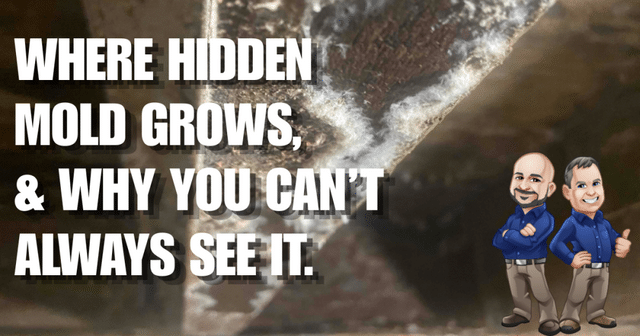
Hidden mold most often grows in the places homeowners rarely look, inside walls, under floors, in crawl spaces, around plumbing, and inside HVAC systems, because those are the areas where moisture collects unseen. By the time visible mold or a musty smell appears in your living space, a colony has usually been growing out of sight for a while. Understanding where mold hides is the key to catching it early, before it becomes a bigger, costlier problem.
This is Part 2 of our four-part mold education series. In Part 1 we covered what mold is; here we explore where it likes to grow.
Why is mold so often hidden?
Mold grows where moisture and darkness meet, and in a home, that describes a lot of places you never see. Water follows unpredictable paths. A small leak in one spot can travel along a pipe, beam, or floor joist and pool somewhere entirely different, feeding a mold colony far from the original source. That is why mold so often develops behind the scenes, quietly, before it ever shows itself.
Where does hidden mold most commonly grow?
Across the homes we see throughout the Tri-State, hidden mold shows up most often in these areas:
• Crawl spaces, damp, dark, and often vented to humid outside air, making them one of the most common hidden mold zones
• Basements, especially those with past water intrusion, condensation, or high humidity
• Behind walls, where plumbing leaks or condensation feed mold inside the drywall cavity
• Under flooring, where moisture seeps beneath hardwood, laminate, or carpet
• Around plumbing, under sinks, behind toilets, and near water heaters and appliances
• Inside HVAC systems and ductwork, where mold can spread spores throughout the home
• Attics, where roof leaks or poor ventilation create trapped moisture
Why does hidden mold matter more than visible mold?
Here is the counterintuitive part: the mold you cannot see can affect your air just as much as the mold you can, and sometimes more. Mold hidden inside a wall or under a floor still releases spores and MVOCs that circulate through your home. Because it is out of sight, it often grows undisturbed for months, spreading further and causing more damage before anyone notices.
This is also why some common detection methods fall short. Air sampling, for example, only captures spores that happen to be airborne at the moment of the test. Mold sealed behind a wall may not release enough spores into the room to show up, which can give a false sense that everything is fine while a colony quietly grows.
What are the warning signs of hidden mold?
Even when you cannot see mold, your home often gives you clues:
• A persistent musty or earthy smell, mold's most reliable calling card
• Allergy or respiratory symptoms that improve when you leave the house
• A history of leaks, flooding, or water damage, even years ago
• Warping, discoloration, or staining on walls, ceilings, or floors
• High indoor humidity or frequent condensation on windows
Frequently asked questions
How do I know if I have hidden mold?
Warning signs include a persistent musty smell, allergy symptoms that improve when you leave home, a history of water damage, and visible staining or warping. Because hidden mold is often invisible, a professional inspection is the most reliable way to confirm it.
Where is the most common place for hidden mold?
Crawl spaces and basements are among the most common hidden mold locations, along with the insides of walls, spaces under flooring, and areas around plumbing. These spots combine moisture, darkness, and organic material.
Can hidden mold affect my air even if I can't see it?
Yes. Mold behind walls or under floors still releases spores and gases that circulate through your home's air, which is why hidden mold can affect indoor air quality even when it is completely out of sight.
So if hidden mold is so hard to see, and air tests can miss it, how do you actually find it? That is where one very special team member comes in. Meet Daisy in Part 3.
Suspect hidden mold but can't find the source? Healthy Spaces can help you locate it, so you can fix the problem, not just the symptom.