
Hard, Dry Ground: What a Stretch of 90-Degree Weather Can Mean for Your Foundation
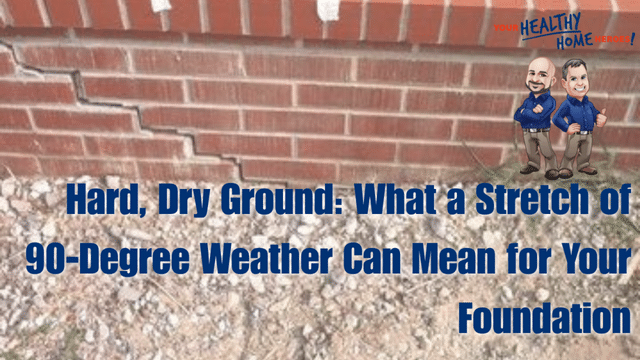
When the Tri-State goes several weeks without meaningful rain and daytime highs sit in the mid-90s, the ground around your home does more than get hard and cracked. Clay-heavy soil loses volume as it dries, and as it shrinks, it can pull away from the foundation it has been supporting.
At Healthy Spaces, we help homeowners understand how dry conditions affect a foundation and why some cracks tend to appear during the driest stretch of the year rather than the wettest.
How Dry Soil Can Affect a Foundation
Clay soil behaves a little like a sponge. It swells when it takes on water and contracts when it dries out. Soil scientists refer to this as shrink-swell potential, and much of Southern Indiana and Western Kentucky sits on soils with a meaningful amount of it.
During an extended hot, dry period, that contraction can be significant enough to leave visible gaps between the soil and the foundation wall. You may be able to see daylight down into a crack in the yard, or slide a stick several inches into the gap alongside the foundation.
When soil shrinks away, it stops providing uniform support beneath and beside the foundation. Portions of the structure may settle slightly into the space that opens up. That settlement is rarely uniform, and uneven movement is what produces cracking in walls, floors, and finishes.
Why Some Areas of a Home Are Affected More Than Others
Soil around a house does not dry evenly, which is part of why foundation movement often shows up on one side of a home rather than everywhere at once. Several factors can concentrate drying in specific areas:
- Large trees or shrubs drawing significant moisture from the soil near the foundation
- South- and west-facing walls receiving the most direct afternoon sun
- Areas with little shade or ground cover to slow evaporation
- Sections where downspouts discharge, creating wetter and drier zones side by side
- Slab or crawl space areas that were backfilled with different soil than the rest of the site
- Portions of the home with less foundation depth or a different footing design
Signs That May Appear During a Dry Spell
Foundation movement related to dry conditions often shows up inside the house before a homeowner ever looks outside:
- Gaps visible between the soil and the foundation wall outside
- New cracks in drywall, particularly above doorways and windows
- Doors or windows that suddenly stick or no longer latch
- Cracks in brick or mortar along exterior walls
- Floors that feel sloped or uneven
- Separation where trim meets the wall or ceiling
- Stair-step cracking in basement block walls
- Nail pops appearing in drywall seams
What an Inspection Actually Looks At
A foundation assessment is not simply a look at the crack itself. The crack is the symptom; the goal is to understand what is causing it and whether it is still moving. During an inspection, a Healthy Spaces System Design Specialist typically evaluates:
- The pattern, width, and direction of cracking, which can indicate the type of movement
- Whether cracking is limited to one area or appears throughout the structure
- Floor level readings to identify settlement across the footprint
- Soil conditions and grading around the exterior perimeter
- Drainage, downspout discharge, and how water moves across the property
- Interior signs including door operation, drywall cracking, and trim separation
- Existing repairs or patching that may be concealing prior movement
Why Dry-Weather Cracks Shouldn't Be Dismissed
A crack that appears during a dry stretch does not resolve when the rain returns. What typically happens instead is that the soil re-expands and pushes back against a wall that has already been weakened, and the cycle continues with each change of season.
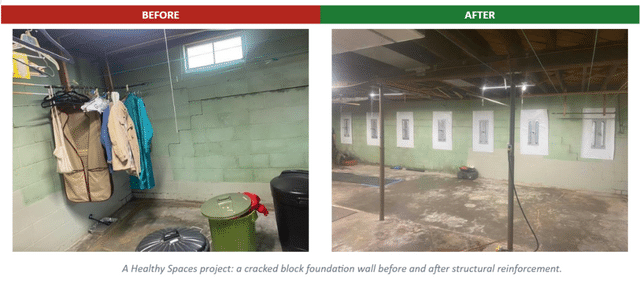
In the home shown above, the crack had been painted over and was partially hidden behind basement storage. It looked like something that had been there a long time and had not caused a problem — which is exactly how many homeowners describe a crack right before it widens.
Structural reinforcement supports were installed along the affected wall at engineered intervals. These are designed to counteract inward soil pressure and stabilize existing cracking so the wall stops responding to seasonal soil movement. Where floors and framing above have been affected, Healthy Spaces also installs the SmartJack XT system with a supplemental beam — a galvanized support system that stabilizes sagging beams and floor joists and can be adjusted over time as needed.
What Homeowners Can Do During a Dry Stretch
Walk the perimeter. Look for gaps between the soil and the foundation. A visible separation is a sign the soil has pulled back and is no longer providing full support.
Water thoughtfully, not heavily. Slow, consistent moisture around the foundation can reduce extreme drying. A soaker hose placed several feet out and run briefly is a gentler approach than saturating very dry soil all at once.
Be mindful of trees near the house. Mature trees can draw a substantial amount of moisture from soil near a foundation during a dry period.
Photograph what you find. Include a coin or ruler for scale so any change over the coming months is easy to see and easy to show a professional.
Note interior changes. Sticking doors and new drywall cracks often appear before anyone inspects the foundation itself, and they help establish when movement began.
Have new cracking evaluated. Movement that begins in a dry period tends to continue as conditions change. An early assessment gives you a documented baseline even if no work is recommended yet.
Healthy Foundation, Healthy Home
Extended heat and dry soil put a different kind of stress on a foundation than heavy rain does, but the result can be the same: movement, cracking, and problems that grow with each seasonal swing. The homes that fare best are usually the ones where someone noticed a change early and had it looked at before the next wet season pushed the soil back the other direction.
If you have noticed new cracks, gaps in the soil around your foundation, or changes in how doors and windows operate this summer, an inspection can help determine what is happening and whether it needs attention.
New cracks showing up in the heat? Find out whether it's cosmetic or structural—schedule your free inspection with Healthy Spaces.