
What Is Radon, and Why Should Evansville Homeowners Care?
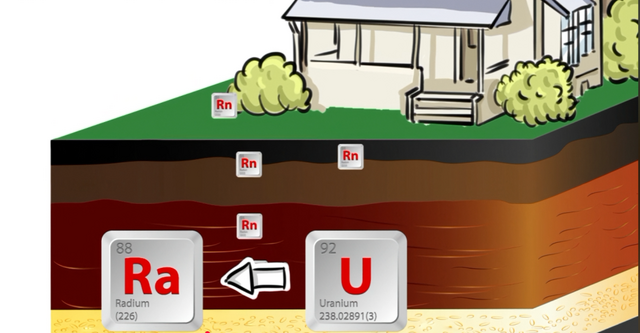
If you've never heard of radon, you're not alone — and that's exactly the problem. Radon is a naturally occurring, radioactive gas that forms when uranium in rock and soil breaks down. It has no color, no smell, and no taste, which means the only way to know if it's in your home is to test for it.
Radon isn't rare, and it isn't a coastal or mountain-state issue — it's found in every U.S. state, including right here in the Tri-State. And because it seeps up from the ground beneath your house, no home is automatically safe just because it's newer, well-built, or has never had a moisture problem.
The Health Risk Is Bigger Than Most People Realize
According to the U.S. Environmental Protection Agency (EPA), radon exposure is linked to approximately 21,000 lung cancer deaths in the United States every year, making it the second-leading cause of lung cancer after smoking — and the leading cause among non-smokers. Because radon breaks down into radioactive particles that can be inhaled and lodge in lung tissue, the danger comes from long-term, everyday exposure inside your own home, not a single bad moment.
That's what makes radon different from a lot of other home hazards: it isn't the occasional spike that does the damage, it's breathing slightly elevated levels day after day, year after year, without ever knowing it.
What Counts as a "Safe" Level?
The EPA has set 4 picocuries per liter (pCi/L) as the action level — the point at which it recommends homeowners fix their home. For context:
- Average outdoor air measures about 0.4 pCi/L
- Average indoor air in the U.S. measures about 1.3 pCi/L
- The EPA's action level is 4 pCi/L — and the agency notes there is no fully "safe" level below that, recommending homeowners consider fixing levels between 2 and 4 pCi/L as well
Local testing across the five-county area surrounding Evansville has found that roughly 1 in 5 homes tests above the EPA's action level — a higher share than many homeowners would expect for a gas they've never even heard of.
One More Reason to Test Now: Winter Is Coming
Radon levels tend to run higher in colder months — in some homes, up to ten times higher than summer readings. As homes seal up tighter for winter and furnaces run more, indoor air circulates less, giving radon more opportunity to build up. Late summer and early fall — before the heating season kicks in — is one of the best times to test.
The First Step Is Simple: Get Tested
You can't smell radon, see it, or feel it — but you can test for it, and the process is fast. Healthy Spaces Systems performs radon inspections and testing in as little as two days, giving you a clear answer instead of a guess.
In the next post in this series, we'll dig into how radon actually gets into your home — and why homes with crawl spaces face a higher risk than most homeowners realize.
Frequently Asked Questions
Is radon dangerous even at low levels?
The EPA's action level is 4 pCi/L, but the agency is clear that there's no fully "safe" level below that — it's a matter of degree, not a hard on/off switch. That's why testing matters even if you don't suspect a problem: it replaces a guess with an actual number.
How do I know if my home has radon?
You can't tell by smell, taste, or how your home feels — radon is completely undetectable without a test. A short-term or long-term radon test is the only reliable way to know your home's level.
I have a newer home — do I still need to test?
Yes. Radon comes up from the soil beneath your home, not from building materials or age, so new construction is not automatically protected. Any home, at any age, can have elevated radon levels.
How often should I retest for radon?
The EPA generally recommends retesting every two years, and sooner any time you finish a lower level, make major changes to your home's foundation or ventilation, or move into a home that hasn't been tested recently.
Don't wait to find out what's in your air.
Get a Free Radon Testing & Mitigation Quote from Healthy Spaces Systems.
Call 1-812-602-4025 or request your free quote online.